

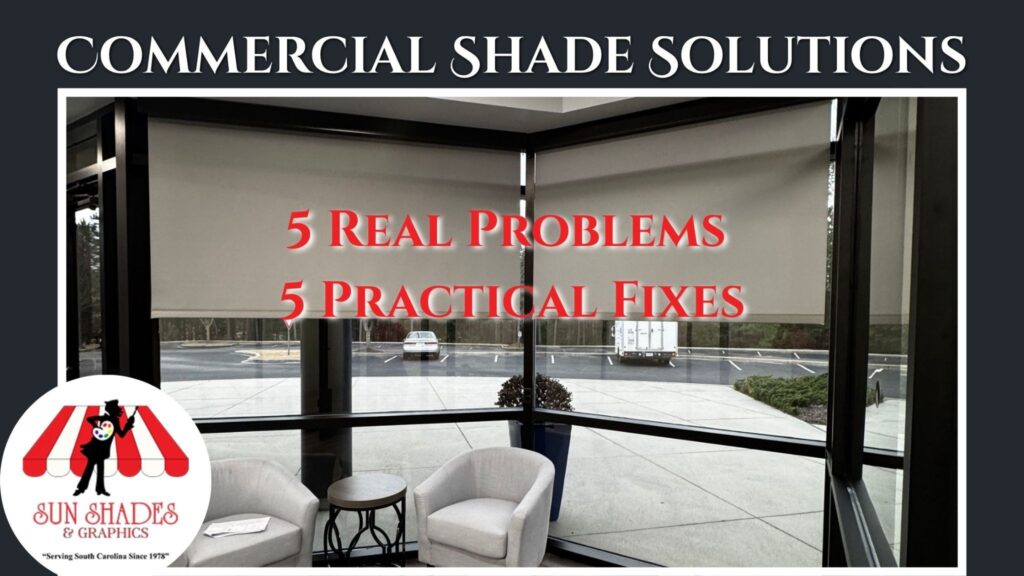
If your commercial building has large windows, a sun-facing entrance, or uncovered outdoor seating, you already know the specific discomforts that come with them. You, your employees, and your customers all have to deal with uncomfortable heat, distracting glare, and the not-always-welcome intensity of the sun. The good news is that each of these problems has a practical, proven solution, and in many cases, a single professional installation of a commercial shade solution can address more than one at once.
Sun Shades & Graphics has been providing commercial solar shade solutions in Columbia, SC since 1980. Over those 45 years, we’ve seen the same sun-related challenges show up in offices, retail spaces, medical facilities, and restaurants alike. Our customers choose from a complete range of products that work individually or together to address what’s most disruptive in your space. Every installation, from LLumar window films, Sunesta exterior roller shades, and both retractable and permanent awnings, is performed by our own experienced in-house team, not subcontractors, and we bring samples directly to your location so you can see exactly what each product looks like before committing.
Below are five of the most common commercial sun problems we solve, and how we solve them.
Problem 1: Glare That Disrupts Work and Customer Comfort
Glare is one of the most consistently reported issues in commercial spaces with significant window coverage. In an office setting, sunlight streaming across a monitor makes it difficult to see the screen, read documents, or hold a video call without repositioning entirely. In a retail environment, it makes product displays harder to view and creates general discomfort that shortens the time customers spend inside. Over time, unmanaged glare affects productivity, increases eye strain, and—for customer-facing businesses—quietly drives people toward more comfortable competitors.
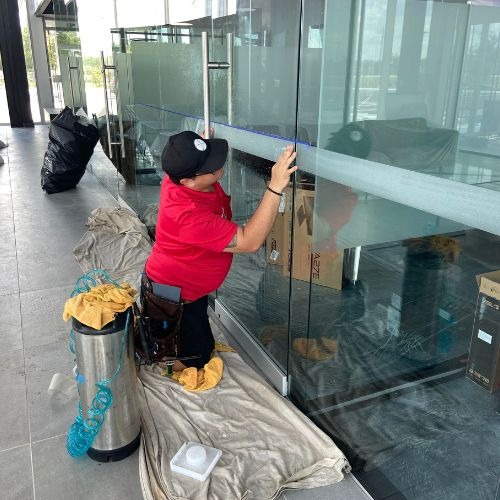
Professionally installed commercial window tinting with LLumar solar films addresses glare directly. Depending on the film selected, solar films reduce visible glare by up to 85% while still allowing natural daylight to fill the room. The difference between professional-grade film and a hardware store alternative comes down to how the product is specified and installed: a film matched to your window orientation, glass type, and sun exposure angle performs far more consistently than a generic product applied without those details taken into account.
For businesses where glare is intermittent rather than constant, interior roller shades offer adjustable control. Employees can lower a shade during peak afternoon sun and raise it later in the day, giving your team direct, on-demand management of light levels without permanently altering the space. Both film and interior shades can be used together when full coverage is needed at some times and open views are preferred at others.
Problem 2: Temperature Imbalances and Uncomfortable Hotspots
Anyone who has worked near a large, south- or west-facing window on a summer afternoon in Columbia knows the experience: the rest of the office sits at a reasonable temperature while one section feels like a completely different climate. These imbalances are uncomfortable for the people in those zones, and they place an ongoing demand on your HVAC system as it tries to compensate for uneven heat loads across the building.
The cause is direct solar heat gain: sunlight passing through untreated glass heats the surfaces and air immediately behind it while shaded areas of the space remain at a more consistent temperature. Modern spectrally selective solar films intercept infrared radiation—the wavelength primarily responsible for heat transfer—before it reaches the interior, while still transmitting most of the visible light. Rooms stay brighter and temperature stays more consistent throughout the day.
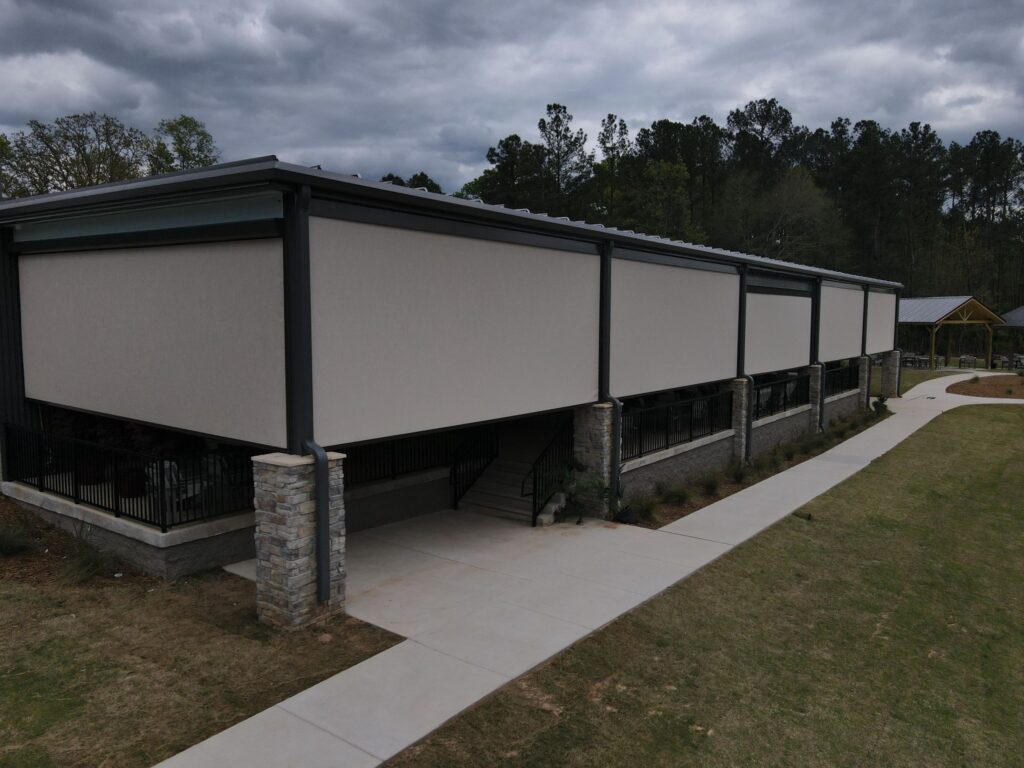
Exterior roller shades are particularly effective for severe hotspot situations because they intercept solar energy before it reaches the glass at all, rather than filtering it after it has already passed through. Mounted above windows or glass doors, they deploy at the touch of a button—or automatically with sun sensors—and can reduce solar heat gain through glass by 65% or more. For storefronts with full-length windows or conference rooms with problematic western exposure, that kind of before-the-glass protection makes a real, measurable difference.
Problem 3: UV Fading and Sun Damage to Your Interior
The furnishings, flooring, and merchandise inside your business represent a real financial investment. UV radiation steadily degrades the materials in a commercial space even on overcast days—the fading that accumulates in carpets, furniture upholstery, wood floors, and retail inventory is cumulative and irreversible. For Columbia businesses that operate in well-lit, window-forward spaces, this is a long-term maintenance cost that often goes unbudgeted until the damage is already visible.
Most high-quality commercial window films block up to 99% of both UV-A and UV-B rays, consistent with performance standards published by the International Window Film Association. Importantly, UV protection does not require a dark or reflective film. Even virtually clear films can provide substantial UV rejection, so you can protect the space without changing how it looks from outside or inside.
Beyond the financial case, there’s an operational one. Faded carpet, sun-bleached retail displays, and discolored flooring communicate wear that affects how customers and clients perceive your space. LLumar commercial window films carry a 15-year warranty on commercial installations. That’s not a short-term stopgap; it’s a durable layer of protection built into the space.
Ready to see what shade solutions could do for your commercial space? Our team comes to you with samples so there’s no guesswork. → Request a free consultation at sunshadesandgraphics.com/contact-us/
Problem 4: Privacy and Security for Staff and Visitors
Commercial privacy concerns are often more routine than they are dramatic. A medical waiting room that faces a busy sidewalk, a financial office where client screens are visible from the street, a retail stockroom inadvertently visible through a pass-through window—these situations create low-level discomfort for staff and clients that adds up. For businesses in healthcare, legal, financial services, and corporate environments, visible exposure to sensitive activities can also raise compliance and confidentiality concerns.
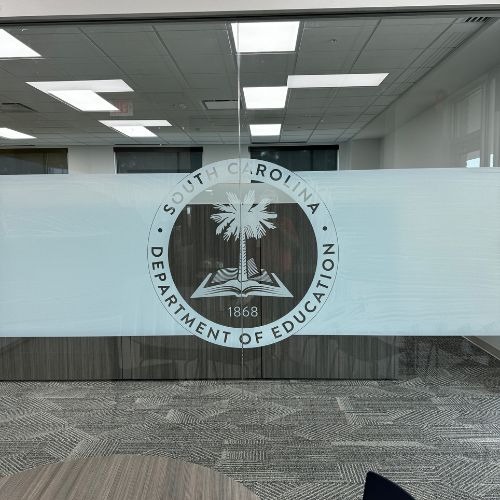
Solar films and decorative glass films address these situations without permanent construction changes. One-way and mirrored films restrict outside visibility during daylight hours while maintaining clear sightlines from the inside. For spaces where complete visual opacity is appropriate—partitions between offices, reception windows, or glass-paneled interior doors—frosted and decorative film options provide privacy while still transmitting light and contributing to the overall aesthetic of the space.
Commercial spaces that most benefit from privacy film installation include:
- Medical and dental practices where patient waiting areas face public walkways or parking lots.
- Law firms and financial offices where confidential documents or client meetings should not be visible from outside.
- Retail operations with stockroom or back-office areas adjacent to customer-facing glass.
- Restaurant and hospitality businesses where staff prep areas or POS systems are visible from the dining room or entrance.
- Corporate offices with ground-floor meeting rooms or open-plan workspaces near street-level windows.
- Government and administrative buildings where security and confidentiality are required by policy or regulation.
In each case, the right film provides functional privacy without creating a sealed or institutional atmosphere. Natural light remains present, and outward visibility from the inside stays clear.
Problem 5: Outdoor and Entrance Spaces That Go Unused
This fifth problem affects a broader range of commercial properties than most owners initially realize. Outdoor seating areas, covered patios, entry overhangs, and building entryways that go unused or underperform because direct sun and heat make them inhospitable represent missed opportunity. For a restaurant, that’s a patio that sits empty during peak lunch hours. For a retail storefront, it’s a shaded entrance area that could draw customers in but instead creates a visual barrier. For a professional office, it’s a client-facing entry that feels harsh before anyone even opens the door.
Retractable awnings from Sunesta—available in 134 fabric designs and a full range of customizations—convert sun-exposed commercial patios and gathering areas into genuinely usable spaces. Options include motorized operation, wind sensors that retract the awning automatically in high winds, dimmable LED lighting, and drop-down shade screens for additional side coverage. For restaurants and hospitality businesses where the outdoor area is part of the customer experience, a retractable awning is one of the more direct investments available for extending the hours and seasons that space can be used.
For entrances, overhangs, and storefront windows, permanent awnings serve both a functional and a branding role. Sunesta permanent awnings are available in the same 134 fabric choices, providing consistent shade above entry doors while reinforcing the visual character of the building. They reduce direct sun on entrance glass, which in turn lowers interior temperatures near the front of the building and makes the transition from outside to inside more comfortable for visitors. Paired with commercial window film on the adjacent glass, a permanent awning creates a layered sun-control system that works from the outside in.
Columbia’s climate delivers significant solar exposure from spring through fall, and outdoor commercial spaces that can’t be actively used during those months don’t deliver full value. Addressing this does not require major construction—the right awning installation converts underused space into a functional asset, typically within a few weeks of your initial consultation.